

Photographing the Bubbles: Capture Jordan Pond’s Iconic View
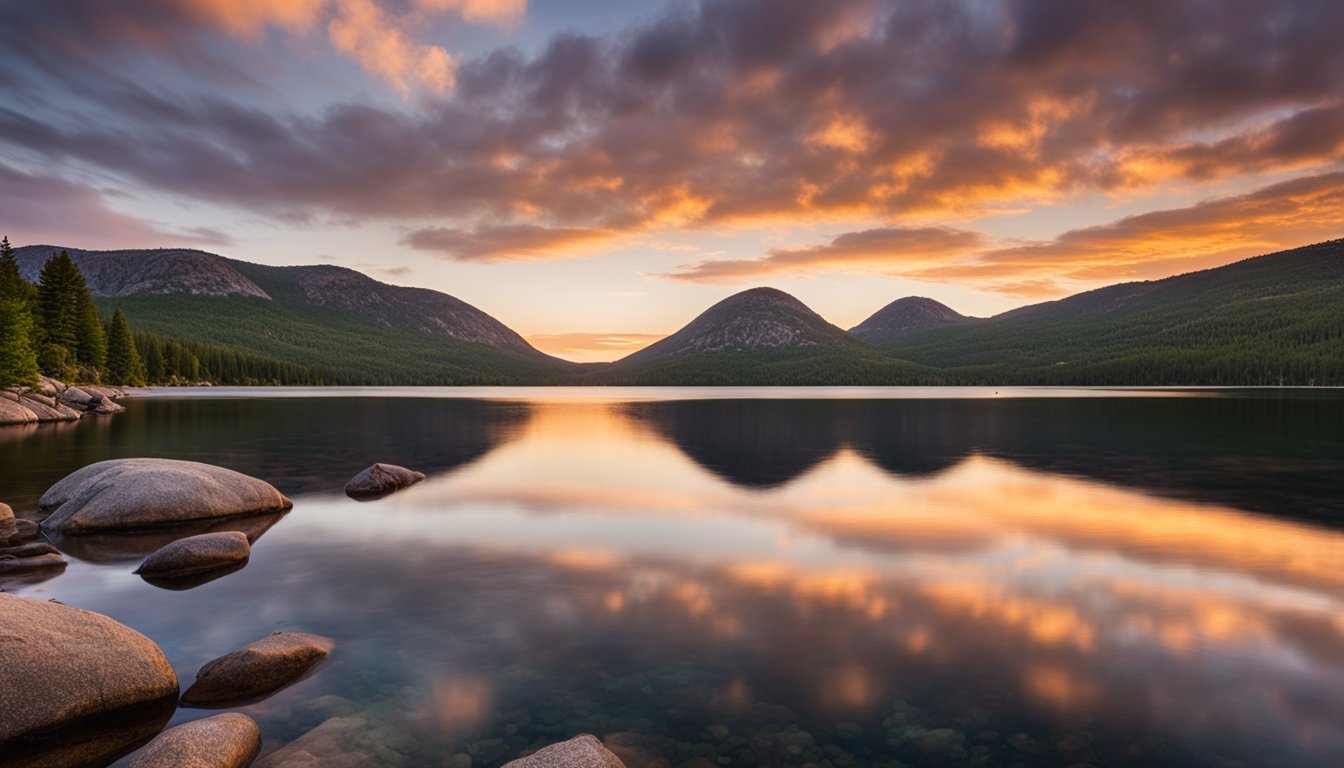
Photographing The Bubbles in Acadia National Park is a favorite for both new and seasoned photographers, especially at Jordan Pond, where those twin peaks show up perfectly in the calm water. To catch that iconic view of the Bubbles reflected in the pond, timing and angles matter a lot. Early mornings usually mean glassy water and gentle light — ideal for big, sweeping shots or even for focusing on the smaller details along the shore.

Follow the paths around Jordan Pond for the best access, with the classic viewpoint near the south end. Sunsets can be gorgeous, but mornings are quieter and more likely to give you that perfectly still water. Definitely bring a tripod for longer exposures, and don’t be afraid to mess around with your composition — there’s a reason everyone wants their own take on this scene.
Planning Your Bubbles Photoshoot
Getting a good shot of the Bubbles reflected in Jordan Pond takes a bit of planning. Maine’s weather can flip on you fast, so a little prep goes a long way if you want a clean reflection of North and South Bubble.

Optimal Times for Capturing Reflections
If you want that crisp, vivid reflection, sunrise is usually your best bet. The air’s often still, so the pond looks like a mirror. Sometimes you’ll get a little fog right after sunrise, which can actually make for some dreamy photos.
Late afternoons and sunsets have their own vibe, especially with the sun dropping behind Mount Desert Island. The pond can get a bit choppier as the day goes on, though, so you might have to wait for the wind to die down.
Fall is wild here — peak color usually hits in early to mid-October, lighting up the hills with reds and golds. If you show up about half an hour before sunrise or sunset, you’ll have time to scout the shoreline and find your favorite spot.
Best Locations and Vantage Points
Main Access: There’s a main parking lot just past the Jordan Pond House. From there, walk along the east shore for those classic views facing North and South Bubble.

Top Spots:
- Boat launch area: Unobstructed, symmetrical views of both mountains.
- South end of the pond: Walk north along the shore — rocks and shoreline plants make great natural frames.
- Wooden plank trail: Offers a lower angle and something a little different from the usual shots.
During peak seasons, especially weekends in summer or when fall colors are popping, parking fills up early. The Park Loop Road makes it easy to get here from other parts of Acadia, so plan ahead if you want a prime spot.
Essential Gear and Equipment
A sturdy tripod is a must if you want sharp images in the soft light of early morning or evening. Wide-angle lenses (like a 16-35mm) are great for the whole scene, and a standard zoom (24-70mm) lets you pick out tighter details of the mountains or reflection.
Gear Checklist:
- DSLR or mirrorless camera (manual controls are a plus)
- Wide-angle and standard zoom lenses
- Circular polarizer (cuts glare)
- Extra batteries, memory cards, lens cloth (mornings can be damp)
- ND filter if you want to slow your shutter way down
Seriously, bring a lens cloth — fog and pond spray sneak up on you, especially at sunrise.
Preparing for Acadia’s Weather
Weather here is unpredictable, especially by the water. Mornings can be chilly or foggy, so dress in layers and toss a light rain jacket in your bag. Even if it’s clear at the visitor center, don’t be surprised if clouds roll in by the pond.
Rain gear for you and your camera is smart, especially in spring or fall. Good shoes help too — the rocks by the pond get slippery. If you’re coming in autumn, brace for cold mornings; temps can drop fast.
Check sunrise and sunset times and glance at the forecast before you head out. Conditions can change, but if you stick it out, you might just get rewarded with those perfect reflections or dramatic skies.
Photographic Techniques for the Bubbles and Jordan Pond
Getting those crystal reflections, moody skies, or punchy fall colors is all about timing and a bit of technique. Framing, light, and filters can make a huge difference in your shots of the Bubbles and the pond.

Composing the Iconic View
For that classic angle, head to the southern shore of Jordan Pond. Use the shoreline or a cluster of rocks as leading lines to pull the viewer’s eye up to the peaks.
Wide-angle lenses (16–35mm) let you get both the Bubbles and their reflection, but a longer lens (50–85mm) is handy if you want to zoom in on the shoreline or the trees with their changing colors. Try both horizontal and vertical shots — you never know which will feel right until you see them.
Early or late in the day is best for calm water and fewer people. Play with the symmetry of the reflection, but don’t forget to include some foreground — grasses, stones, anything that adds texture.
Mastering Lighting, Exposure, and Contrast
Light changes fast at Jordan Pond, especially around sunrise or sunset. Mornings are soft and gentle, while evenings bring deeper colors and longer shadows. Watch out for the sun blasting over the Bubbles — it can blow out your highlights or make harsh shadows.
If the sky is a lot brighter than the water, try bracketing exposures or use a graduated ND filter to even things out. Keep an eye on your histogram so you don’t lose detail in the clouds or the dark woods.
Polarizers can make the sky pop and cut glare, but be careful not to overdo it, especially with wide lenses. Adjust until the scene looks natural to your eye.
Creative Uses of Filters and Long Exposure
A polarizer is super useful here to control reflections and see through the water. If you want that silky, surreal look, slap on an ND filter and try longer exposures — anywhere from a second to half a minute. It’ll smooth out ripples and make the reflections and clouds stand out.
Try different shutter speeds. Shorter exposures keep a bit of texture in the water, while longer ones make everything look extra calm. Use a tripod and a remote or timer to avoid shaking the camera.
For dramatic skies, combine a polarizer and ND filter, especially if clouds are moving fast. It can really add some motion and color contrast to your shots.
Capturing Seasonal Changes and Fall Color
Fall in Acadia is something else — late September through mid-October, the hills explode with color. Overcast days are actually great for even lighting and deep, saturated tones.
Frame your shots to include both the shoreline foliage and their reflections. Mix up your focal lengths; sometimes a tight shot of colorful leaves by the water says more than a big wide landscape.
Watch the weather and aim for calm days for the clearest reflections. Early morning frost, a little fog, or golden hour light can totally change the mood of your photos.
Beyond the View: Exploring Acadia’s Other Photographic Highlights
Acadia has so much more than just the classic Jordan Pond scene. There’s a crazy variety of landscapes, wildlife, and even some surprisingly good stargazing if you’re out late.

Hiking Trails for Unique Angles
If you want something different, hit one of the park’s trails. The Beehive Trail is a short, steep scramble with huge views of Sand Beach and the Atlantic. Precipice Trail is intense — think ladders and cliffs — but the vistas are worth it.
For a more relaxed stroll, the Carriage Roads wind through mossy forests and over those iconic stone bridges (they look great in photos). Ocean Path hugs the coast and takes you past spots like Boulder Beach and Otter Cliffs — light changes a lot through the day, so every visit feels new.

If you’re up for a climb, Pemetic and Sargent Mountains both offer sweeping views and a chance to shoot blueberry barrens or granite domes up close. Always check trail conditions, especially if you’re hauling a camera bag.
Best Hiking Trails for Photography
| Trail Name | Key Viewpoints | Difficulty | Notable Features |
|---|---|---|---|
| Beehive Trail | Sand Beach, Atlantic Ocean | Moderate | Iron rungs, cliffs |
| Precipice Trail | Champlain Mountain | Strenuous | Sheer drops, ladders |
| Carriage Roads | Forests, bridges | Easy | Stone bridges, woodlands |
| Ocean Path | Boulder Beach, Otter Cliffs | Easy | Coastal scenery, tidepools |
| Pemetic Mountain | Jordan Pond, Cadillac Mtn | Moderate | 360° views, open summits |
Wildlife and Nature Photography
There’s plenty of wildlife if you’re patient: white-tailed deer, red squirrels, and a ton of birds — especially during migration. Early or late in the day is best for animal activity and softer light. Sometimes you’ll spot bald eagles or woodpeckers along the trails or near wetlands.
Mushrooms pop up after rain, and a macro lens can really make those details sing. Around ponds, keep an eye out for frogs, beavers, or the occasional waterfowl.
Foxes and porcupines show up if you’re lucky, but always give wildlife space. The Sieur de Monts area is loaded with ferns, mosses, and birds — perfect for a slower-paced nature shoot.
Astrophotography and Stargazing
Acadia’s dark skies are a treat if you’re into night photography. Cadillac Mountain is a go-to for Milky Way shots or meteor showers, especially in late summer when the air is clear and dry.
Schoodic Peninsula is quieter and has less light pollution than Bar Harbor. Eagle Lake and the Jordan Pond shoreline also work well if you want star reflections in your frame.
Prime stargazing is usually midnight to 3 a.m. Bring a tripod, extra batteries, and a wide, fast lens. If you’re near the coast at night, check tide charts — wet rocks and changing water levels can make things tricky.

Essential Gear for Night Shoots
- Tripod
- Extra batteries
- Headlamp (red mode is a lifesaver)
- Wide-angle lens (f/2.8 or faster)
Coastal and Water Features
The rocky coastline is classic Maine. Thunder Hole is famous for waves — mid-tide is best for catching dramatic splashes. Otter Cliffs has steep drops and killer sunrise or sunset views.
Bass Harbor Head Lighthouse is a must at golden hour when the light hits the rocks just right. Isle au Haut is more remote, but the beaches and tidepools are worth the trip if you want fewer people in your shots.
Kayaking or canoeing on Eagle Lake or Jordan Pond gives you a new angle on the reflections. Just make sure to check which lakes allow close shoreline access, since some supply drinking water.
And hey, snapping a photo of those famous popovers from the Jordan Pond House with the mountains behind them? Not a bad souvenir. Always check park maps for boat launch spots and follow the rules for water access.
Frequently Asked Questions
Getting great photos of the Bubbles at Jordan Pond is all about choosing your time, spot, and approach. Knowing how the light changes, how to work with reflections, and what’s around the pond can really help you nail the shot.
What are the best times of day to capture the Bubbles at Jordan Pond for optimal lighting?
Early morning and late afternoon are usually best. Sunrises offer softer light, calm water, and fewer crowds, while sunsets can bring out warm colors and a peaceful vibe.
Which photographic techniques should be used to get clear reflections in Jordan Pond?
Wait for still weather — wind will mess with your reflections. Get your camera close to the water for a low angle, and use a tripod to keep things sharp, especially if it’s dim out.
Are there any specific camera settings recommended for photographing the mountain scenery in Acadia National Park?
Stick with a low ISO (100–400) for clean images. An aperture of f/8 or f/11 keeps most of the scene sharp. A polarizer helps cut glare and punch up the contrast.
Can you suggest some vantage points around Jordan Pond that are ideal for photographing the Bubbles?
The southern shore, near the main trailhead and Jordan Pond House, gives you an open, centered view. The carriage road on the east side and spots along the loop trail offer different angles and foreground options.
What are the seasonal considerations to keep in mind when planning to photograph the Bubbles in Acadia?
Spring and summer are all about green, while fall brings the famous foliage. Winter can mean snow and ice — pretty, but sometimes tricky for hiking. Fog is common in late spring and early summer mornings, which can add mood or hide the peaks, depending on your luck.
How can one include the unique flora of Acadia in the foreground of a photograph featuring the Bubbles?
Look for blueberry bushes, mossy boulders, or wildflowers near the water. Use them at the bottom of your frame for context and scale, but be gentle — don’t trample the plants just to get your shot.
Reflections of Jordan Pond’s Iconic View
Photographing the Bubbles from Jordan Pond is pretty much a bucket-list moment for anyone visiting Acadia. With a bit of timing and some creative framing, you’ll come away with images that really capture the twin peaks and the park’s unique vibe.

Soft morning or evening light usually gives you the richest colors and most balanced exposures. Weather and seasons keep things interesting, so you’ll never get the same shot twice.
Quick Tips:
- Arrive early or late for the best lighting.
- Use a tripod for sharp reflections.
- Experiment with both wide and zoom lenses.
For more trip planning and photo ideas, check out the TM2 Maine Acadia National Park Visitor Guide. You’ll find articles, tips, and more attractions to help you make the most of your visit.


